My book and web site

Check out my book, The Sustainable-Enough Garden, available on Amazon, and the book's web site at www.thesustainable-enoughgarden.com. See more plant photos on Instagram.
Showing posts with label water. Show all posts

Sunday, July 26, 2020

Weathering drought

This May I posted about my suspicion that I was over-watering my garden, and why that was environmentally unsound. The post prompted me to cut back drastically on watering via our sprinkler irrigation system. Until this summer, I had the system programmed to deliver water twice weekly to each of twelve irrigation zones.

    I was aware that most of my established trees, shrubs, and perennials were well adapted to dry spells during New England summers. They needed frequent watering in their first two years while they got settled and developed a generous network of roots. After that, they should be able to thrive without supplemental watering, except at the driest times. 


Established plants should be able to cope with dry summer conditions

    So why didn’t I cut out the watering after plants entered their third year in the garden? One excuse is that I was continually adding new plants, so often a bed with older plants also contained newcomers. But I think the real reason was that in my heart, I didn’t really believe that my babies could make it through the summer without a regular soaking two or three times per week.


Would the balloon flowers perish without watering?

    After challenging myself with that blog post, I decided to focus on watering areas where I’m growing vegetables, annuals, and newly planted and perennials. In the rest of the garden, I’d stop irrigating. If individual plants needed water, I’d water them by hand.


I'm still watering a bed of vegetables and pollinator plants

     Overall, I’m surprised and pleased at how well the garden is looking this year with about a third as much irrigation as I gave it during the last few summers. My area is experiencing a mild drought. This weekend we were 5 inches behind our average precipitation for the year, despite heavy rains this week. Yet the garden is chugging along, not noticeably daunted by the dry conditions.


Doing fine without watering

    Over the years I did reduce watering in some of the irrigation zones that contained only mature plants. A red-leaved Japanese maple (Acer palmatum ‘Atropurpureum’) and mostly evergreen shrubs in a bed of vinca (Vinca minor) in the front yard got less and less irrigation. This year this zone is getting none, which highlights an issue with my planting plan.
     

     Two mountain hydrangeas (Hydrangea serrata) that I planted in the front yard don’t tolerate dry spells the way the other denizens do. The hydrangeas wilt dramatically after three days without rain or irrigation. 

Lacecap hydrangea starting to wilt

This year, instead of taking that as a cue to irrigate the whole bed, I’m watering the hydrangeas with a watering can. That seems to suit them fine. 

     I could have avoided this complication if I’d thought to group plants that need lots of water together in one irrigation zone, as a Xeriscape gardener would do. That way I could have lavished water on one section close to the house and let the rest of the yard fend for itself.


     By taking parched conditions in stride, the garden is teaching me a lesson. I’m seeing that it’s OK to let my plants live as they would naturally, including tolerating some dry times. 


Coneflowers unfazed by summer weather

Monday, May 25, 2020

Watering smarter

On warm days this week, I’ve resumed one of summer’s tasks: watering. Back when my garden was young and all the plants were new, I was grateful to have a computerized irrigation system to keep them lush. Over the years, though, I’ve become increasingly conscious of using too much water. 


Automatic sprinkler watering the lawn and nearby beds

One of the environmental downsides to using purified drinking water in the garden, as I do, is its energy cost. Water utilities consume 3 percent of the energy generated in the United States. By cutting back on automatic irrigation, I can make a small contribution to the fight against global warming.

Clean drinking water comes with a carbon cost

Our sprinkler irrigation system was typical for our area when it was installed in 1997. It divides the yard into twelve watering zones, and it’s controlled by a computer in the basement. An attached rain gauge prevents watering after a storm. In retrospect, I could have saved a lot of water by choosing drip irrigation instead of sprinklers. 

Drip irrigation in an almond orchard. Emitters deliver water only to the trees' root zones

A drip system for trees and shrubs would direct water to exactly where it’s needed. Sprinklers inevitably lose water to evaporation. I cringe a bit when I see sprinklers in the neighborhood running in the middle of the day. To minimize that evaporative loss, I program the sprinklers to run after midnight, when it's dark and cool. That’s still less efficient than drip emitters would be. 


Another wasteful feature: our system’s watering zones were laid out when the garden was new. Sprinkler heads placed to water sections of lawn now cover a mix of grass and young and old shrubs and perennials. I don’t have the flexibility to target just the new plantings within a zone. 


Some environmentally-minded gardeners water only by hand, even in the relatively wet Northeast. A lovely garden I visited last summer is maintained without an irrigation system. The homeowner and garden designer explained that most of her garden gets no supplemental watering. When she needs to water new plants, she fills a bucket or watering can from one of her rain barrels.


Water from barrels at downspouts is sufficient for Joanne's native plant garden


At this stage, most of my garden is comprised of established trees, shrubs and perennials. They’ve spread their roots far and wide to find water when soil is dry. New England plants have adapted to survive our summer dry spells, even without the kind of Xeriscaping that’s appropriate to arid parts of the country. A lot of the irrigation I’ve been doing is probably unnecessary at this point.

It's pretty in May, but sweet woodruff is taking over, maybe because of steady moisture from irrigation.

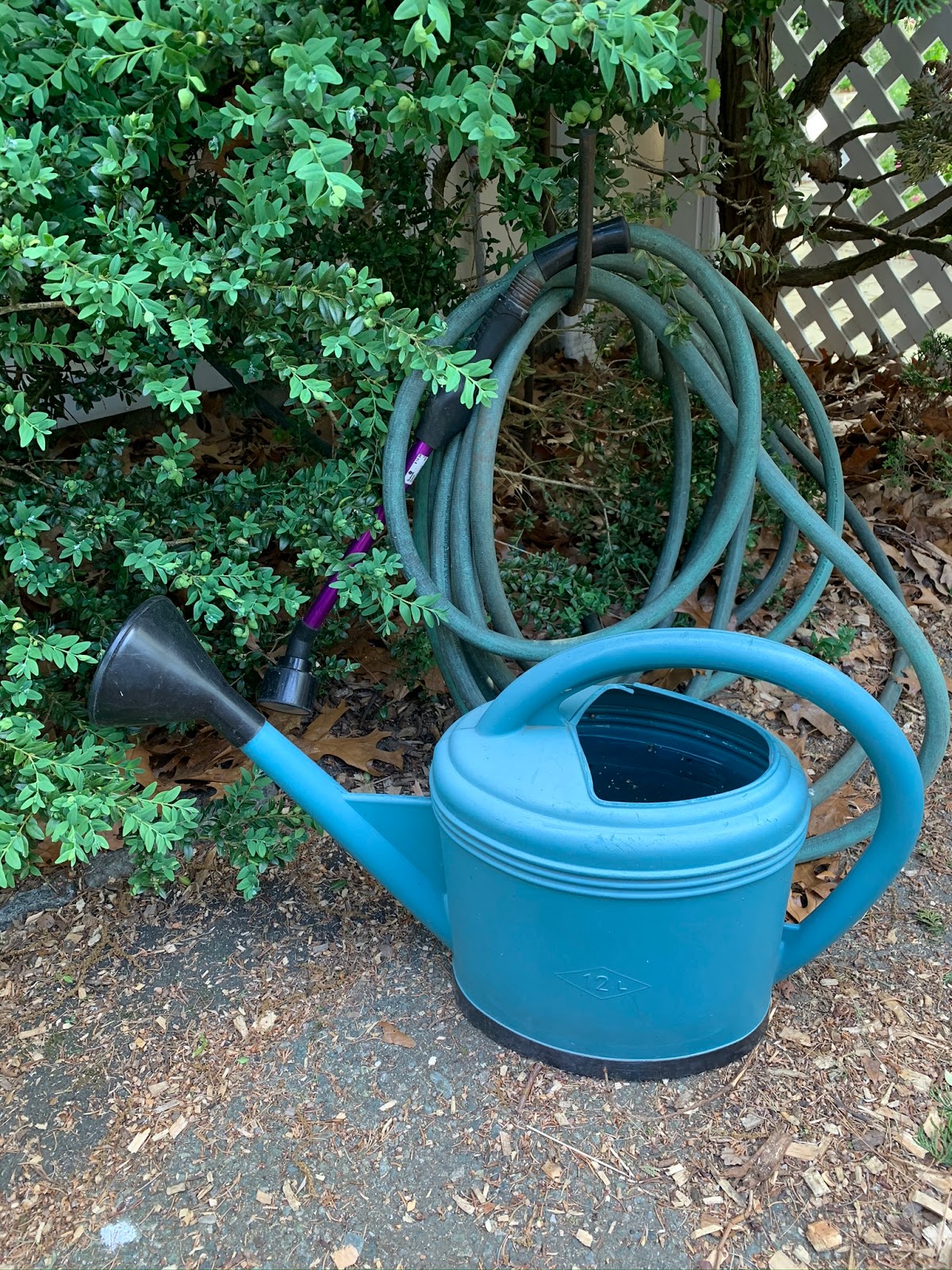
The bold move would be to cut off irrigation to those older plants, at least until I see that they’re really suffering from drought. New plants will still need two years of watering to get established. That’s where watering cans and hose wands come in.


Ready for summer

Hand watering has its pleasures, especially in summer’s soft morning and evening light. That’s often when I truly see these new arrivals to the garden. I notice the unique patterns of new leaves and register the weeds emerging alongside. I’m looking forward to observing more closely this summer.


Sunday, June 18, 2017

Water, water all around

With Massachusetts’ drought officially over as of May 10,  I’m feeling more comfortable about watering my garden. 

Nice to see rain on the hostas

I’m happy when it rains, even though some of my annual plants, most noticeably the tomatoes, are slow to take off this spring because of fewer sunny days. 

     With plentiful rain comes other problems, though. During last week’s heavy rain, water streamed down the street in front of our house toward the storm drains.


Rainwater heading for the storm drain

    Rainwater running off roofs and down driveways in our neighborhood could be carrying toxic chemicals from both surfaces into storm drains and through them to rivers and Boston Harbor. The EPA, the Massachusetts Department of Environmental Protection, and local government all advocate keeping rainwater at home, not letting it wash into the street.


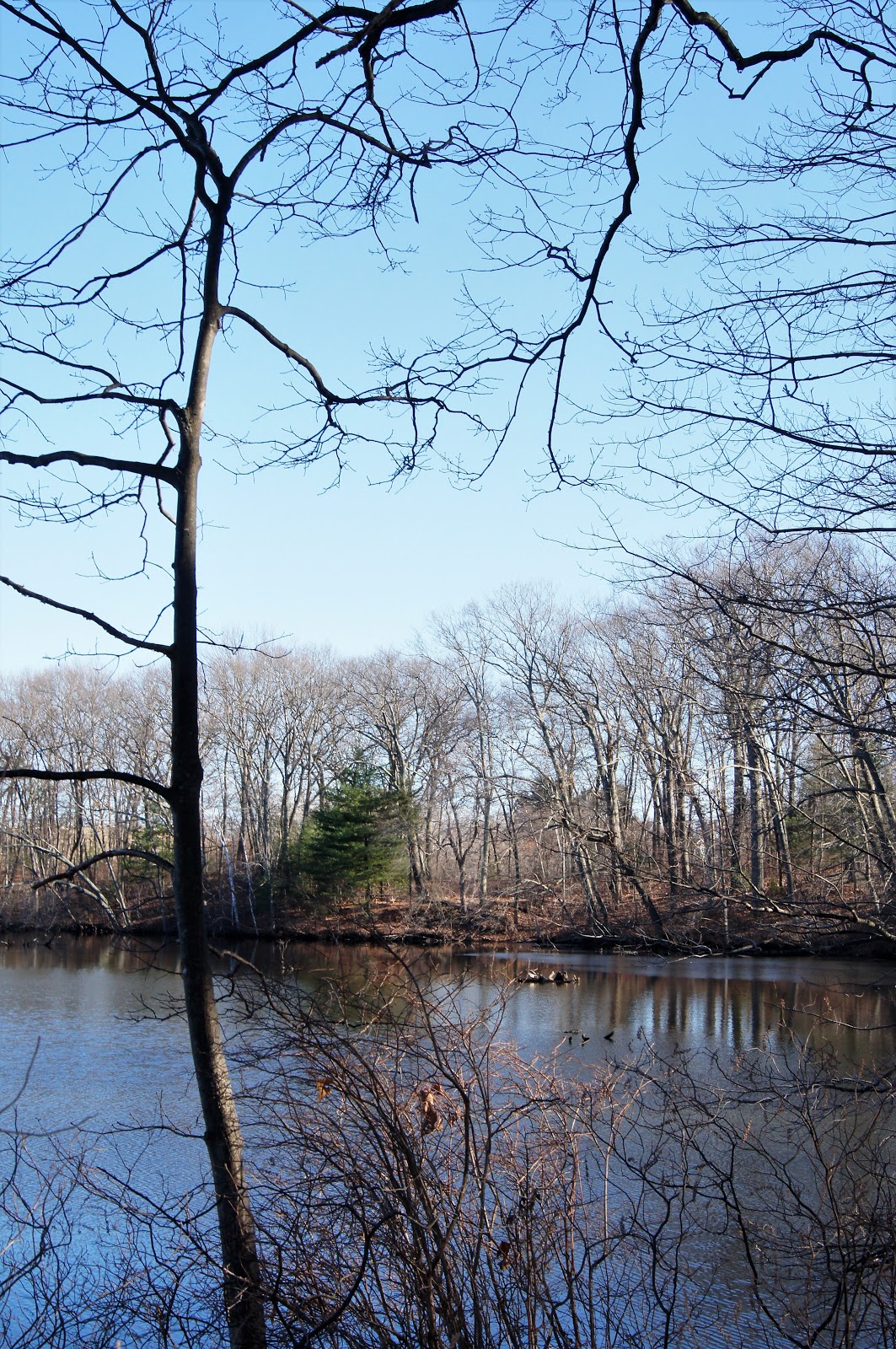
     Our section of town backs up against the Charles River, which is one of our area’s most beautiful and prized natural resources. 


A quiet spot along the Charles

Years of effort have gone into restoring it from a toxic waste stream to a place where people and wildlife can enjoy the benefits of clean water. 

     At this point, storm water runoff is most of what pollutes the Charles by carrying oil, grease, gasoline, pet waste, detergents, pesticides, fertilizer, and trash into the river. 

Overgrowth of algae in a river caused by fertilizer runoff

Rain should be soaking into the soil to replenish groundwater, but with more areas paved or covered with lawns that slope toward the street, it flows into storm drains instead. 

     Not wanting to be part of the problem for the river, in 2013 we agreed to install two 14-foot strips of porous paving in our driveway. One runs from a downspout at the corner of the house toward the street. The other crosses the width of the driveway alongside the sidewalk. 


     This material looks like asphalt but allows water to flow through to a layer of crushed stone which holds the water while it gradually percolates into the subsoil. When it rains, we can see that water no longer flows down the driveway into the street. As the water reaches the porous paving, it disappears into the ground.

Water drains through the darker porous paving

     Our sandy soil drains fast. We never see flooding in our yard. Rainwater falling on soil sinks into the ground and doesn’t flow toward the neighbors’ paved parking area behind our lot. So the porous paving in the driveway is enough to prevent storm water from running off our property.


Rainwater doesn't flow off the berm at the back of the yard


     Rainwater streaming from downspouts and driveways into the street now looks to me like a waste. Instead of watering with purified tap water, we could be collecting storm water and using it in our gardens. I calculate that the rain falling annually on our 1,900-square-foot roof could supply just about all the water I use for irrigation. 


     So have I been harvesting water that falls on the roof? No, I’m sorry to say I haven’t. The obstacles are cost and the prospect of digging a huge hole in the garden for an underground cistern. Maybe 

someday. Meanwhile, I’m enjoying the irrigation that’s falling from the sky.

Diverting some rainwater with a rain barrel